The 3-Step Reset for When Life Goes Sideways
We don't get to choose when life blindsides us — the unexpected redundancy, the doctor's call, the relationship that ends without warning. But we do get to choose what happens next.
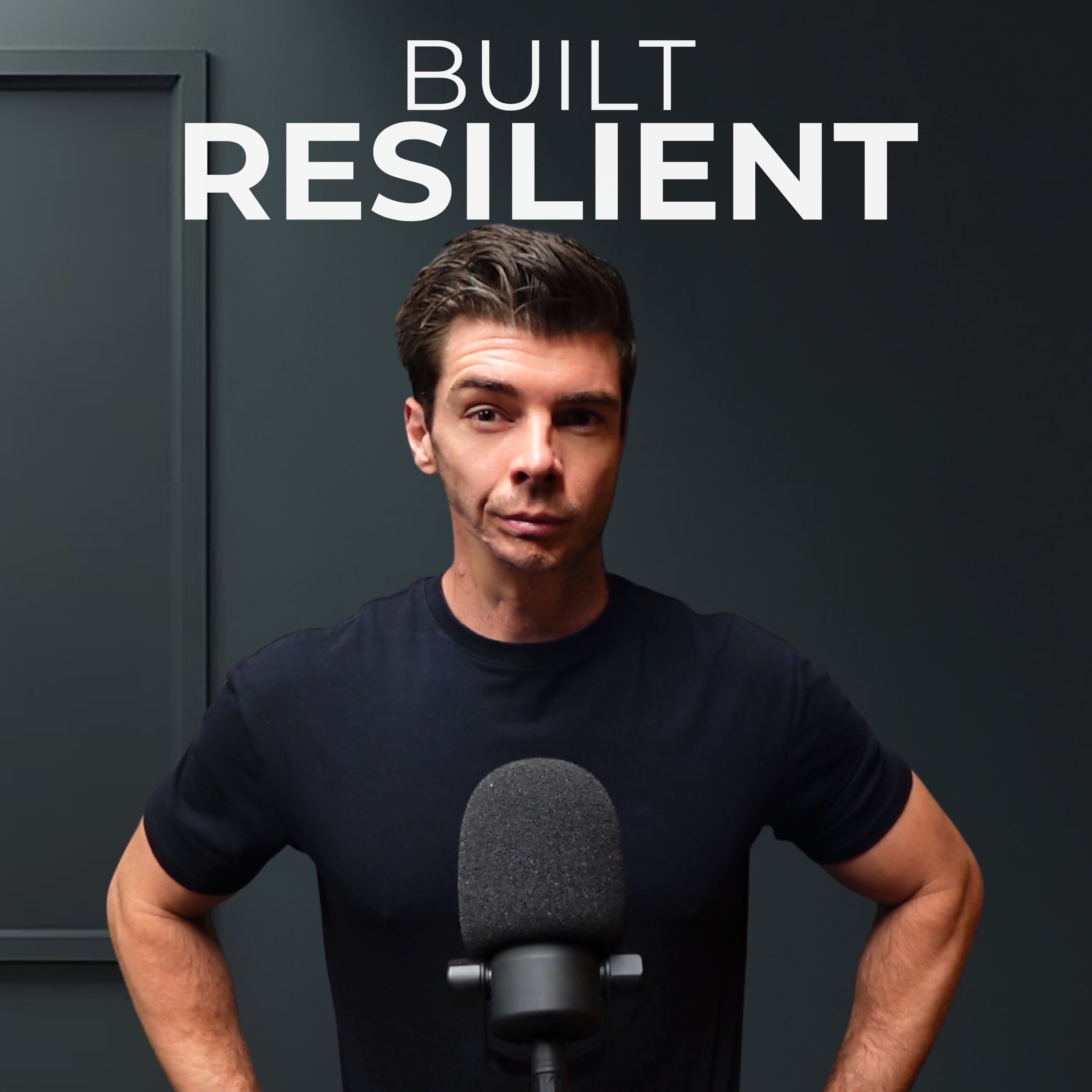
In this episode of Built Resilient, Resilience Speaker Bart Walsh breaks down the anatomy of the ambush — the biological reason why sudden, unwanted change feels like a threat to your survival — and gives you a practical, three-step circuit breaker to move from panic to power.
In this episode, you'll learn:
- Why your brain can't tell the difference between a lion and a layoff — and what that means for your decision-making
- The concept of the amygdala hijack and how it shuts down rational thought in moments of crisis
- Bart's personal story of having a major project cancelled overnight — and the turning point that changed how he handles adversity
- Why you don't need a 10-step framework — just a survival circuit breaker
The 3-Step Resilience Framework:
- Find the Space — Observe your body's response without becoming it
- Find the Reframe — Challenge the narrative your brain is telling you
- Love Your Fate (Amor Fati) — Accept reality so completely that you can turn it into fuel
Whether you're facing organisational change, personal loss, or just the relentless noise of a world moving too fast, this episode will give you the tools to stand your ground — and keep building.
📖 Referenced in this episode: The Obstacle Is the Way by Ryan Holiday
🎬 Want to watch this episode?
💻 Follow Bart on socials:
Want to contribute to the show?
📧 hello@bartwalsh.com.au
Transcript
It's the phone call you didn't expect. It's the email saying that your role is no longer required.
It's the doctor's office, the breakup, or just the morning news telling you the world has gone sideways again. When sudden change hits, your brain doesn't see a challenge. It sees a threat to your existence. Your heart, it hammers. Your vision, it narrows.
And your logic, it vanishes. All together now. Most people spend their lives running from this feeling. I'm going to show you how to stand your ground within it.
Today we're talking about the anatomy of the ambush. How to hijack your fight or flight response when life catches you off guard. And how to move from why me to love your. Your fate.
Let's get into it, team. A sincere and honest welcome back to Built Resilient. My name is Bart Walsh. I am a keynote speaker.
I'm a fitness expert and we talk about building strength on this show. But what about when your ground shifts beneath your feet? What can we do then when we're feeling not as strong as we usually do?
Team Resilience isn't just about the weights that you choose to lift. It's about how you can carry the weight that you didn't even ask for. And the world feels like it's in a constant state of high alert at the moment.
I don't know if it's you or it's me or it's both of us, but I feel like everyone's feeling this way. There are redundancies left, right and center. Global shifts are happening. Petrol is becoming scarce. Hoard it. Do it now.
Personal losses are left, right and center as well. And it feels like we're all living, I don't know, in a pressure cooker.
So in this episode, we're going behind the biology of the ambush, why we feel this way when sudden change, unwanted change happens to us. And I want to give you a manual for the moments when life does indeed get loud. Now, if you are new here, welcome to the show. Great to have you here.
My name is Bart Walsh. I am a keynote speaker. I speak on a stage for a living and I feel blessed to do so.
And I created this podcast to propel the message that I have on stage, but also hopefully to impact more people through the digital pathway of the Internet. So if you are here, hey, give us a follow, give us a five star rating if you take something away.
My sincere recommendation is to share this episode with someone who might need it, someone who's going through a sudden change in their life. And at the end of the day, welcome to the family.
I've spent years coaching people through transitions, but I've had my own moments where the amygdala hijack that beautiful chaos center of our brain. It certainly took the wheel of my life.
And I remember a time many, many years ago now when a massive project, one that I had poured my soul into, was cancelled overnight. I've done all the work. It's all ready to go. But it was no longer necessary. And there was no warning and there was no soft landing into this news.
And look at the time. I felt a really familiar surge, one that I'd felt many times in my life.
It was that heat on the back of the neck, the tingling in the skin, the buzzing in my hands. My brain, it then started looping. How will I pivot? What will I do? What will other people think? Am I wasting my time? Is this the end of this run?
I don't know. And in that moment, I wasn't a keynote speaker. I certainly wasn't a gym coach or a performance coach. I was a mammal. I was human.
And I knew I was in a trap. And that is the first thing that we need to understand in this episode.
The panic that you experience in times of sudden change, it's biological honesty. It's truth. It's your body trying to save you from the perceived threat that is in front of it.
But the problem is the tools your body uses to save you from a lion or a rhino or danger are the exact same tools that will ruin your ability to make a smart decision about your career or your family. The mechanisms, they are the same. I had to learn. And to be honest, I've learned it many, many times.
But I had to learn that gap between the ambush, between the moment and my action, that very important gap. And that was where my freedom lived, and yours as well.
I had to stop trying to stop the adrenaline coursing throughout my veins and start learning how to drive the car while the engine was on fire. So in the name of learning how indeed to drive that car, when life hits you with the unexpected, you honestly, you don't need a ten step plan.
You don't need the seven week framework. You simply need a survival circuit breaker. And here is how. We can navigate that ambush in three simple steps. The first is to find space.
And it's hard to find in moments of chaos, I know that. But the moment that that news hits you, your heart rate spikes. And your executive function in your brain, it shuts down.
Your rational thought shuts down because you're in survival mode.
So step one is to simply notice, don't try and solve the problem yet, because you probably can't just look at your body, feel it, and say out loud, my heart is racing, my palms are sweaty, my vision is narrowed. This is adrenaline. This is what it does. And simply by observing this sensation, you stop being the sensation.
You take a step back, you look at yourself objectively and go, huh? This is happening. And then you create a tiny sliver of space between the shock and your soul, your identity.
And that space is where your power begins. Without that space, we can't make rational decision. And then the second step beyond that is to find the reframe of the situation that you are in.
Once you have acknowledged the biology, once you've acknowledged your body going through this process, you have to challenge the narrative. The ambush always tells a story of loss, of dread, of negativity.
The reframe, how you frame the situation, tells a story of transition, of momentum, of movement. So when you ask yourself in this space, in this moment, if this was not a disaster, what else could it be?
Is it an exit ramp from a job that's actually killing your soul anyway? Is it a forced pruning of something that we can now grow bigger? You don't have to like it yet, but you have to stop labeling it as the end.
Because, team, it is not. And when we think about change, I often think about opportunity.
Because with every sudden change, with every big change that happens in your life, all of a sudden 20 other doors open up in front of you. But we often don't see those doors because we're stuck in that adrenaline state and we're stuck in that space of no space.
And then step number three is rule number three of the three rules of resilience. It's to love your fate, amor fati. And hey, this can even be your mantra, moving forward. Love your fate, amor fati.
This is the third rule of resilience. And it's the third rule of resilience for a reason. It's also the hardest rule, but the most transformative.
Loving your fate doesn't mean you're happy with what's happening to you or the things that are going wrong. It means that you accept the reality of that moment so completely that you can turn it into fuel, you can turn it into momentum forward.
It's like saying, this is what is it's fact. It's happened. I can't control it. I didn't choose this path, but I. I will own this Path, it will be mine, baby.
And when you stop wishing things were different, you reclaim all the energy you were wasting on why me? And blaming other people. And then you put it into what's next, into what's ahead of you.
To love your fate is to realize that the obstacle isn't in the way. The obstacle is the way. Ryan Holiday read that book. So, team, I want you to listen to me.
If you are going through a moment of sudden change, if you are going through a mom of challenge, a moment of chaos, and you find yourself in that moment of adrenaline, of the blood coursing throughout your body, your vision narrowing and not being the person that you know you are, I want you to listen. The world, the world is only going to keep getting crazier. I have that sincere feeling. I think we can all feel it deep down somewhere.
These ambushes are going to keep on coming, particularly with AI coming in and changing the way we work and live all together. And then, guess what? You can't control the wind, but you are the absolute master of your sail.
So next time the floor drops out beneath you, I want you to breathe. I want you to feel your body. I want you to audit it. I want you to find that reframe that puts you on the right path.
And then I want you to look at that challenge in the eye and say, I love that thing. I love that fate. Because you weren't built for the easy days in this life. You were built resilient for this day.
Team, my name is Bart Walsh, and if you are navigating this ambush right now, keep going. Don't stop. Your breakthrough is on the other side of your breast. It's on the other side of space.
And, team, this seems to be a conversation I'm having a lot with all the presentations I'm doing at the moment in almost every organization that I go into, and it might be yours as well. There's change and there's significant change. There's organizational change, there's life change. The way we work is changing. It's getting faster.
The stress isn't necessarily less or more, but it just seems to be different. And so if you know your team, perhaps, or you know someone in your life that is experiencing this change, I want you to share it with them.
I want you to share it with them to extend an olive branch and say, hey, you're not alone. This world is changing. Team, thank you for listening, as always. Give us that rating.
Make sure you're subscribed on whatever platform you're listening to. This on and go and build something today. Build something big, something epic, something audacious.
And even if you have to build it from the record you are currently in, keep on building. I'll see you in the next one. Remember to choose resilience. Bye.